
My name is Ahsan. I’m the founder of I Love Online Tool, and I’m based in Lahore, Pakistan.
I want to be upfront about something before this post even starts — I am not a nutritionist or a doctor. What I am is someone who grew up in a household where food was always talked about as more than just fuel. My mother would say ginger for an upset stomach. My grandmother would insist on warm turmeric milk when someone had a cold. My father always kept dates and almonds around.
For a long time, I thought this was just tradition. Old habits passed down without much science behind them.
Then I started reading. And I realized the science often agrees — not completely, not magically — but meaningfully.
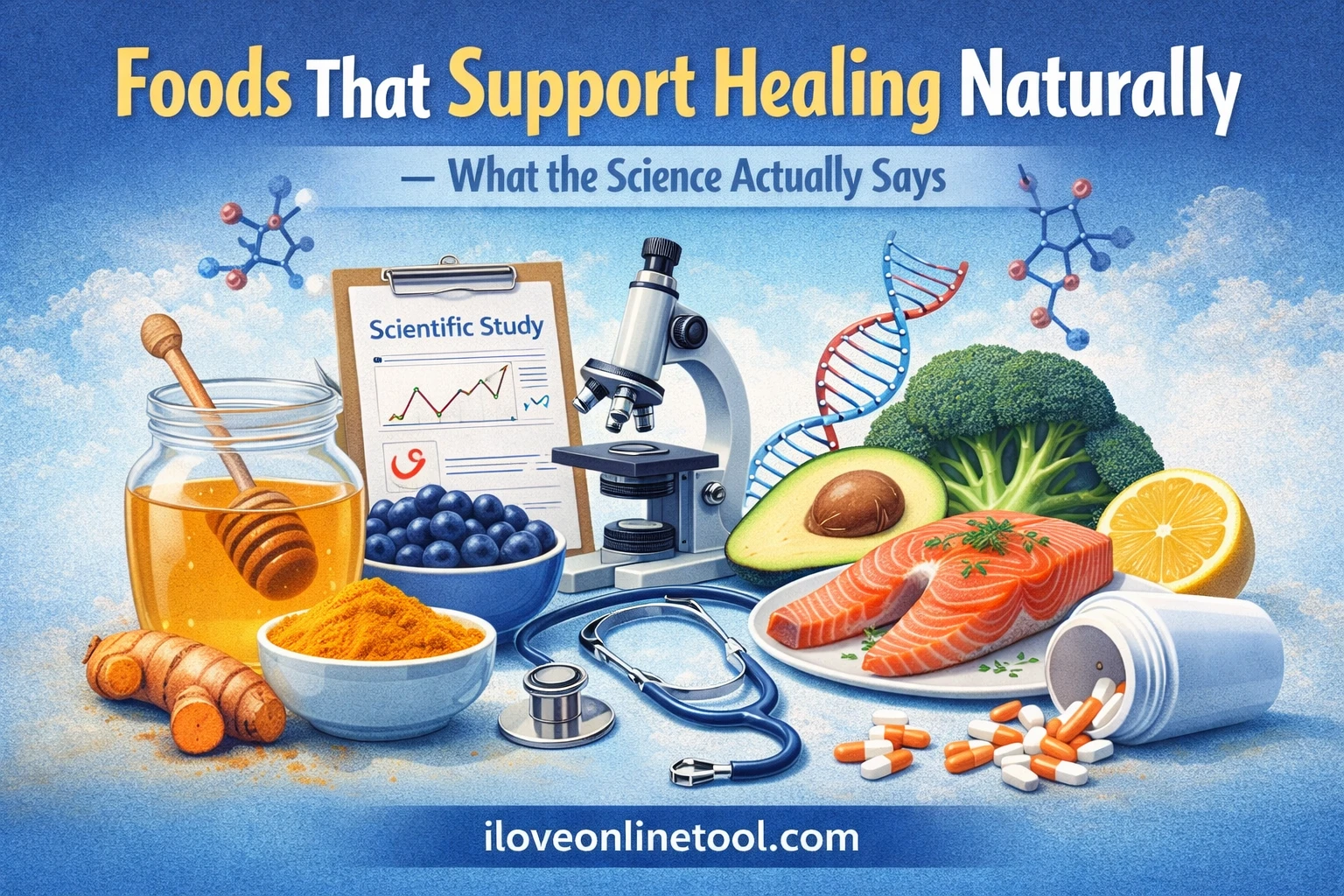
This post is my honest attempt to explain what nutrition research actually says about foods that support the body’s natural processes. No miracle claims. No exaggeration. Just what we know and what we don’t.
First — What “Healing” Through Food Actually Means
Let’s be clear about this from the start because it matters a lot.
Food does not cure diseases. If you have a serious medical condition, food alone cannot treat it. Anyone who tells you otherwise is misleading you.
What food does — and does very well — is support the systems your body uses to protect itself, repair itself, and maintain balance. Your immune system, your digestive system, your cardiovascular system — all of these depend on nutrients from food to function properly.
Think of it this way. Food is not the doctor. Food is what keeps the doctor’s office further away.
That distinction is important and it’s the foundation of everything in this post.
Why Consistent Eating Patterns Matter More Than Individual Foods
Here is something nutrition science is very clear about that most people miss: no single food is a superfood that fixes everything.
What actually works is consistent patterns over time.
Someone who eats a varied diet of whole foods — vegetables, fruits, whole grains, lean proteins, healthy fats — will have better health outcomes than someone who eats poorly but drinks a green smoothie every morning.
The research on this is solid. Large population studies consistently show that overall dietary patterns, not individual foods, are the strongest nutritional predictor of long-term health.
So when you read about “healing foods” — including in this article — always understand them in the context of an overall diet, not as standalone fixes.
Foods That Genuinely Support Your Body — With Real Reasons Why
With that foundation established, here are categories of food that nutrition science links with meaningful health benefits:
Leafy Green Vegetables
Spinach, kale, methi (fenugreek leaves), and other dark leafy greens are among the most nutrient-dense foods available. They provide vitamins A, C, and K, iron, calcium, and a range of antioxidants.
Antioxidants matter because they help neutralize free radicals — unstable molecules that damage cells over time and are linked to chronic diseases. Regular consumption of leafy greens is consistently associated in research with lower risk of heart disease and certain cancers.
Practical note: in Pakistan and South Asia generally, we are actually lucky — saag, palak, and methi are staple foods that happen to be nutritionally excellent. Many people eat them regularly without realizing the health value.
Ginger and Turmeric
These two come up in nearly every traditional South Asian household for good reason — and modern research has caught up with that tradition.
Ginger contains compounds called gingerols that have documented anti-inflammatory and anti-nausea effects. It is one of the most well-researched natural foods for digestive discomfort. If you have ever felt better after ginger tea when your stomach was upset — that was not just placebo.
Turmeric contains curcumin, which has been studied extensively for its anti-inflammatory properties. The research is genuinely promising — though it’s worth noting that curcumin is poorly absorbed on its own and works better when consumed with black pepper, which contains piperine that significantly boosts absorption.
Neither ginger nor turmeric is a cure for anything. But as part of regular cooking, both contribute real nutritional value.
Fermented Foods
Yogurt, dahi, lassi, and fermented vegetables support gut health by introducing beneficial bacteria — probiotics — into your digestive system.
Your gut contains trillions of bacteria collectively known as your gut microbiome. This community of microorganisms plays a significant role in digestion, immunity, and even mood. Research in this area has expanded dramatically over the past decade.
Fermented foods help maintain a healthy balance of gut bacteria. This is especially important after illness, antibiotic use, or prolonged poor diet. In Pakistani cuisine, dahi is both culturally embedded and genuinely beneficial — a combination that doesn’t come along often.
Citrus Fruits and Vitamin C Rich Foods
Oranges, lemons, guava, and amla are rich in vitamin C — a nutrient your body cannot produce itself and must get entirely from food.
Vitamin C supports immune cell function, helps with iron absorption from plant sources, and plays a role in collagen synthesis which supports skin and tissue repair. Research consistently confirms its importance in immune health.
It does NOT prevent colds as dramatically as popular belief suggests — but it may shorten their duration and reduce severity when consumed regularly.
Lentils, Beans and Legumes
Dal in all its forms is one of the most nutritionally complete foods in South Asian cooking. Lentils and legumes provide plant-based protein, iron, fiber, and folate — all essential nutrients.
Iron from plant sources is less easily absorbed than iron from meat, but combining lentils with vitamin C rich foods (like a squeeze of lemon in dal or eating it with a tomato salad) significantly improves absorption.
For vegetarians or people who eat meat infrequently, legumes are one of the most important protein and iron sources available.
Nuts and Seeds
Almonds, walnuts, chia seeds, and flaxseeds provide healthy fats, protein, fiber, and various micronutrients. Omega-3 fatty acids found in walnuts and flaxseeds in particular are linked with heart health and reduced inflammation.
Small daily portions — a small handful of mixed nuts — provide meaningful nutritional benefit without excessive calories.
Whole Grains
Brown rice, oats, and whole wheat bread provide fiber, B vitamins, and steady energy that refined grains cannot match. The fiber in whole grains feeds beneficial gut bacteria and helps regulate blood sugar by slowing digestion.
Switching from white rice or white bread to whole grain versions is one of the simplest and most impactful dietary changes most people can make.
What About Common Pakistani Home Remedies?
Since this platform is built by someone from Lahore, I want to address this specifically.
Many home remedies passed down through Pakistani and South Asian families have genuine nutritional merit. Here are a few honest assessments:
Warm milk with turmeric (Haldi Doodh) — There is real anti-inflammatory benefit in turmeric and milk provides calcium and protein. The warmth is soothing. This is a legitimately reasonable remedy for minor discomfort.
Ginger tea for stomach issues — Well supported by research on ginger’s effect on nausea and digestion. Genuinely useful.
Honey for sore throat — Honey has documented antimicrobial properties and coats the throat providing real (if temporary) relief. Research supports it as a mild remedy for sore throats.
Ajwain (carom seeds) for gas and bloating — Traditional use is supported by some research showing it may ease digestive spasms. Worth trying for minor digestive discomfort.
Methi (fenugreek) for blood sugar — Fenugreek seeds have been studied for their effect on blood sugar management. Some evidence supports modest benefits. Not a replacement for diabetes medication but potentially a useful addition to a controlled diet.
The key word with all of these is “support” not “cure.” They work best as part of an overall healthy lifestyle — not as emergency treatments for serious conditions.
What Food Cannot Do — Being Honest About Limits
This matters just as much as everything above.
Food cannot treat infections that require antibiotics. Food cannot manage serious chronic diseases like diabetes or hypertension on its own — these require medical treatment alongside dietary support. Food cannot replace essential medications. Food cannot reverse serious nutritional deficiencies quickly — those often require supplements under medical supervision.
If you or someone in your family has a serious health condition, please see a doctor. Good food is a companion to medical care, not a replacement for it.
How to Use Our Food Cure Hub Tool
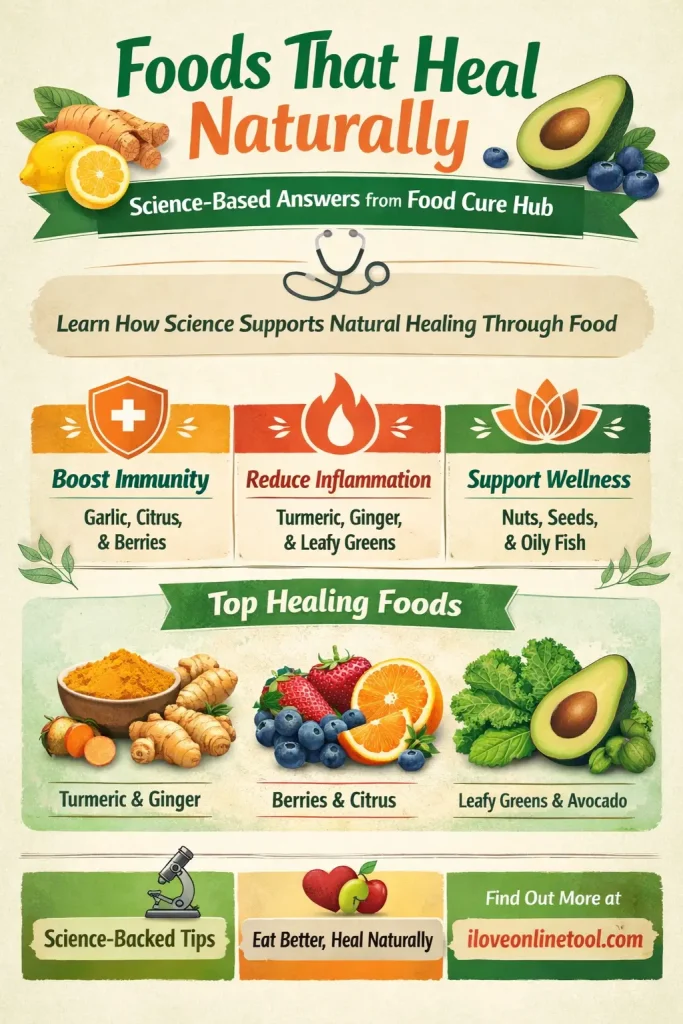
The Food Cure Hub on this platform lets you search for foods linked with common health concerns. Enter a symptom or health goal and the tool suggests foods traditionally and nutritionally associated with that concern.
It is designed as an educational reference — not a medical tool. Use it to learn, explore, and make more informed choices about what you eat. Always apply your own judgment and consult a professional for anything beyond general wellness.
Related Tools on This Platform
For a more complete picture of your health and nutrition needs:
- BMI Calculator — Check your Body Mass Index quickly and accurately
- Height & Weight Calculator — Find your healthy weight range based on height and gender
- Unit Converter — Convert between measurement units for cooking, health tracking and more
Frequently Asked Questions
Can food really support healing? Yes — food provides the nutrients your body needs to power its own healing and protective systems. It supports healing. It does not replace medical treatment.
Which foods are best for immunity? Foods rich in vitamin C, zinc, protein, and probiotics consistently show up in immunity research. Citrus fruits, yogurt, lentils, nuts, and leafy greens are all solid choices.
Are traditional home remedies trustworthy? Many are — ginger, turmeric, honey, and fenugreek all have research supporting their traditional uses. They work best as regular dietary habits rather than one-time emergency fixes.
Should I replace medicine with food? Never. Food supports your health. Medicine treats illness. Both have their place and they work best together under proper medical guidance.
How long does it take for diet changes to show results? Meaningful changes in how you feel from dietary improvements typically take weeks to months of consistency. There are no overnight results from food changes.
⚠️ Health Disclaimer
All content in this article and through the Food Cure Hub tool on this platform is provided for general educational purposes only. It is not intended as medical advice, nutritional prescription, or treatment guidance. Individual health needs vary significantly. Always consult a qualified doctor or registered nutritionist before making significant changes to your diet, especially if you have a medical condition, are pregnant, or are taking medication.
About the Author
Written by Ahsan — Founder of I Love Online Tool, based in Lahore, Pakistan. Ahsan is a digital tools developer and educational content writer who builds free, practical online utilities for students, professionals, and everyday users. His interest in health education comes from a personal background of growing up in a household where food and wellness were taken seriously. All content on this platform is written and personally reviewed by Ahsan for accuracy, responsibility, and genuine usefulness.
📧 support@iloveonlinetool.com | 🌐 iloveonlinetool.com
