
The Question “Expertise vs Experience Google” I spent an embarrassingly long time thinking expertise was the whole game. If I could just prove I knew my stuff, credentials, depth, the works, the rankings would follow. So I loaded up on authoritative-sounding content and wondered why a scrappy little review post, written by someone who’d clearly just used the product, kept beating my polished expert guide.
Took me a while to admit what was happening. That reviewer had something I didn’t. Not more expertise. More experience. And Google, it turns out, cares about both, in different amounts depending on what you’re writing.
That’s the confusion I want to clear up here. Experience and expertise sound like the same thing, get used all the time interchangeably, and are actually two distinct things Google weighs separately. Get the difference wrong and you’ll pour effort into the wrong signal, like I did.
So let’s sort it out properly. What each one means, which one Google wants and when, and how to show both without faking either. This is the version I wish someone had handed me before I wasted a year over-indexing on the wrong E.
Expertise vs Experience Google’s Eyes: The Quick Version
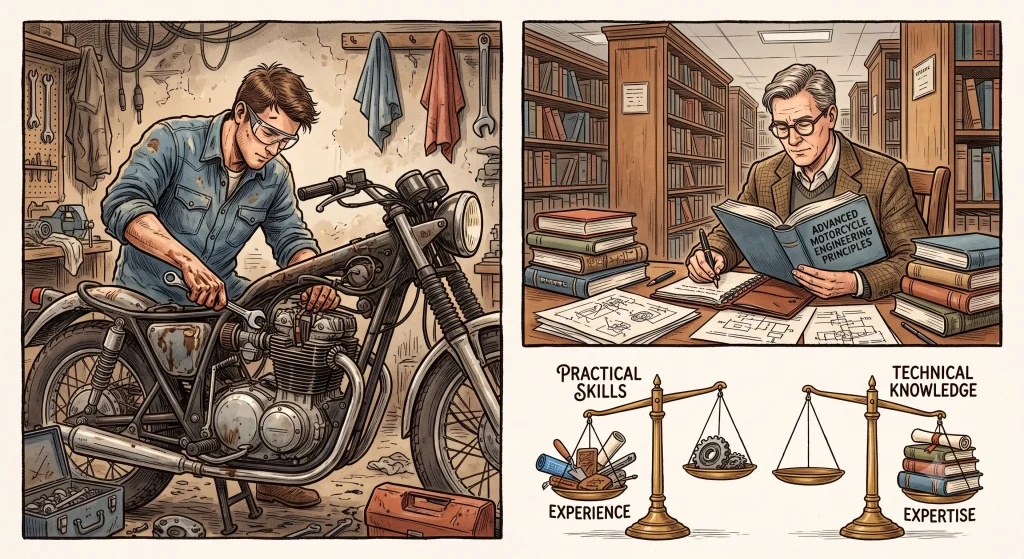
Here’s the short answer before we go deep. When people talk about expertise vs experience in Google’s framework, they’re pointing at the two E’s in E-E-A-T: Experience and Expertise. Experience is about having done the thing. Expertise is about knowing the thing. Related, sure, but not the same, and Google treats them as separate signals for a reason.
Quick grounding, in case the acronym’s fuzzy. E-E-A-T stands for Experience, Expertise, Authoritativeness, and Trust, the qualities Google’s quality raters weigh when judging content. If that framework’s new to you, it’s worth getting the full picture of what E-E-A-T actually means first, because experience and expertise only really make sense as part of the whole.
The distinction matters because they pull from different places. Expertise can come from study, training, years of deep knowledge. Experience comes from actually living it, using it, being there. A doctor has medical expertise. A patient who’s managed a condition for a decade has experience. Both are valuable. Neither is a substitute for the other. And knowing which one your particular piece of content needs more of is half the battle.
What Experience Means to Google
Experience is the newer of the two, and honestly the more interesting one. Google added it to the framework in late 2022, bumping the old E-A-T up to E-E-A-T. That wasn’t a cosmetic change. It was Google formally saying: for a lot of content, whether you’ve actually done this matters just as much as whether you’re credentialed in it.
Think about what you actually want when you search certain things. A review of a vacuum cleaner from someone who’s owned it for a year beats a spec summary from someone who’s never touched one. A guide to visiting a city from someone who’s been there beats a polished article assembled from other articles. That lived, first-hand quality is experience, and it’s genuinely hard to fake.
What does it look like on the page? Specific detail nobody could’ve googled. Original photos you actually took. Honest notes on what went wrong, what surprised you, the part the official description leaves out. The little texture of having really been there. When Google’s systems and quality raters look for experience, that’s the evidence they’re reading, the fingerprints of someone who did the thing rather than just researched it.
There’s a reason Google bothered to add this. The web filled up with competent, correct, utterly generic content, the kind you can assemble by reading five other pages and rewriting them. It’s technically fine and completely forgettable. Experience is the thing that content can’t have, because you can’t research your way to a memory. So it became a useful line to draw between someone who actually engaged with a topic and someone who just processed information about it. And once you notice that line, you start seeing it everywhere in your own drafts.
What Expertise Means to Google
Expertise is the older, more familiar E, and it’s about knowledge and skill. Does the person, or the site, genuinely know this subject at a deep level? Not surface-skimming. Real command of the material, the kind that shows up in nuance, accuracy, and the ability to handle the tricky edge cases most content skips.
Here’s the part people miss: expertise isn’t only about formal credentials. Google’s own guidance is clear that the kind of expertise required depends on the topic. For a medical or legal question, yes, you’d want real qualifications behind the content. But for a knitting tutorial or a video game guide, the relevant expertise is a genuinely skilled knitter or a player who deeply understands the game. Different topics, different flavors of expert.
On the page, expertise reads as depth and correctness. The content goes past the obvious. It gets the details right, because getting small facts wrong quietly signals you don’t really know the big ones either. It answers the question fully instead of sending readers off to finish their research somewhere else. Expertise is, basically, the content demonstrating that whoever made it actually understands what they’re talking about.
Experience vs Expertise: The Actual Difference
Let me make the contrast concrete, because this is where it clicks. The simplest way I’ve found to hold the two apart:
| Question it answers | Experience | Expertise |
| Core question | Have you done it? | Do you know it? |
| Where it comes from | Living it, using it, being there | Study, training, deep practice |
| How it shows on the page | Specific first-hand detail, original media | Depth, accuracy, nuance, full answers |
| Easy to fake? | Very hard | Hard, but fakeable with good research |
| Strongest for | Reviews, how-tos, personal topics | Technical, medical, financial, YMYL |
The thing to notice is that they’re not ranked against each other. It’s not that one’s better. They answer different questions. You can have deep expertise in a topic you’ve never personally experienced, and you can have tons of experience with something you couldn’t explain the theory behind. A nutrition scientist versus someone who lost forty kilos. Both worth listening to. About different things.
Which raises the obvious question. If Google wants both, which one should you be leaning on? That depends entirely on what you’re writing, and it’s where most people go wrong.
So Which One Does Google Actually Want?
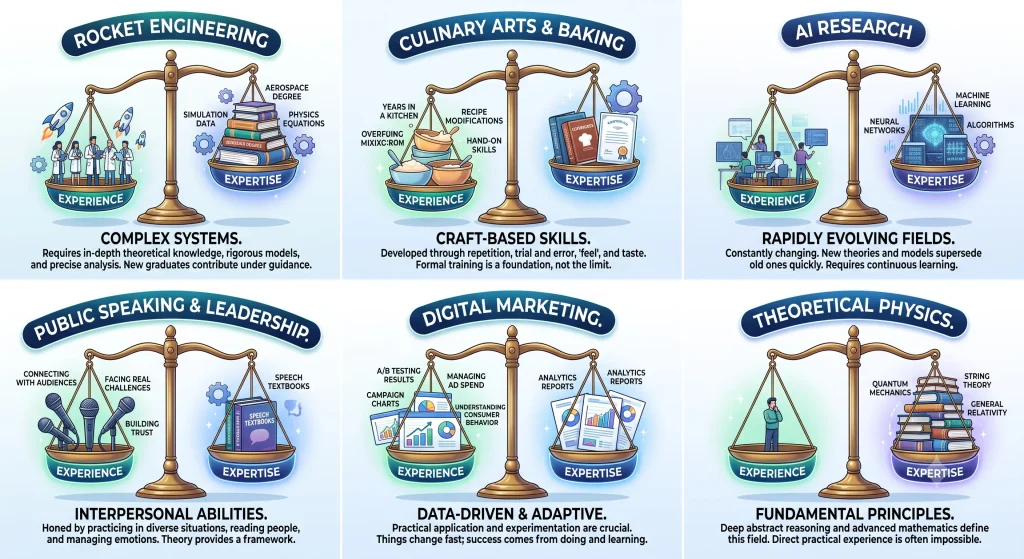
The unsatisfying but honest answer: it depends on the topic. Google isn’t picking a universal winner. It’s asking which quality a good answer to this particular query would have. And that changes a lot depending on what someone’s searching for.
For some content, experience carries the most weight. For other content, expertise does. And for a fair chunk of it, you genuinely want both showing up together. The mistake I made, and that I see constantly, is treating one as the answer for everything. Piling credentials onto a product review that really needed someone to have used the product. Or writing a breezy experiential take on a topic that actually demanded serious expertise.
So instead of one blanket rule, it helps to know when each one leads. Let’s break that down, because getting this match right is most of what separates content that satisfies a searcher from content that leaves them still looking.
When Experience Leads
Some topics live or die on first-hand experience. Product reviews are the obvious one. Nobody wants a review from someone who never used the thing, and Google knows it. The same goes for anything experiential: travel, restaurants, hands-on how-tos, “what it’s actually like to” content, personal journeys through some process.
For these, having genuinely done it is the whole value. Your specific, lived detail is exactly what a searcher is hoping to find, and it’s what lifts your post above the ten generic summaries that read like they were assembled from a search results page. Expertise still helps here, don’t get me wrong. But experience is what’s carrying the piece.
I learned this the hard way with that review post I mentioned. The one beating mine wasn’t more expert. It just clearly came from someone who’d lived with the product, mentioned the annoying quirk on week three, showed a real photo of it on their actual desk. That texture won, because for a review, that texture is the point.
When Expertise Leads
Flip it around and there are topics where experience alone isn’t enough, and can even be dangerous. Medical content. Financial advice. Legal information. Anything in the “Your Money or Your Life” category, where getting it wrong can genuinely harm someone. Here, Google leans hard on expertise, often the credentialed kind.
Think about why. You wouldn’t want cancer treatment advice from someone whose only qualification is having been sick once. Personal experience matters and adds something real, but on high-stakes topics it can’t replace actual expertise. The bar is higher because the cost of being wrong is higher. For these subjects, demonstrable knowledge, qualifications, and accuracy do the heavy lifting.
This is exactly why blanket “just share your experience” advice falls apart for YMYL niches. If you’re writing in health or finance, you need the expertise to back it, and where you don’t have it yourself, you bring in someone who does or point readers toward properly qualified sources. Experience is welcome. It just isn’t enough on its own when the stakes are real.
Why You Usually Want Both
Here’s where it gets genuinely useful, because most great content isn’t experience or expertise. It’s both, working together. The combination is hard to beat, and it’s what I now aim for on almost everything.
Picture the ideal. Someone who deeply understands a topic and has personally done it. A financial planner who’s also climbed out of debt themselves. A developer who knows the theory cold and has shipped the thing to production and hit the bugs. That mix, real knowledge plus real experience, is about as trustworthy as content gets, because it satisfies both questions at once. Do you know it? Yes. Have you done it? Also yes.
You don’t always have both personally, and that’s fine. Sometimes you pair an experienced writer with an expert reviewer. Sometimes you lean on your genuine experience while being honest about the limits of your expertise. What you shouldn’t do is fake the one you’re missing. The gap between real and pretend on either of these shows, and Google’s increasingly good at reading it. If you want a fuller playbook on strengthening both across a whole site, I’ve laid out the practical version in a separate guide on how to improve your site’s E-E-A-T.
The reason both together is so strong comes down to trust. Expertise makes you believe the information is correct. Experience makes you believe the person actually knows how it plays out in the real world, not just on paper. When a reader gets both at once, there’s very little left to be skeptical about, and low skepticism is basically what trust is. That’s why the debt-free financial planner or the ship-it-yourself developer feels so much more credible than either a pure academic or a pure amateur. They close both gaps in one go.
How to Show Both in Your Content
Knowing the difference is useless if it doesn’t change what you actually publish. So here’s how I try to get both onto the page.
For experience, get specific. Swap the generic line anyone could’ve written for the detail only you’d know. “The setup was easy” becomes “the setup took eleven minutes and the only confusing bit was a buried checkbox.” Add your own photos. Mention what went wrong. Include the small, real observations that prove you were actually there. That texture is the tell, and it’s the thing that can’t be researched into existence.
For expertise, go deep and get it right. Cover the nuance most articles skip. Nail the details, because accuracy is how knowledge shows. Back your factual claims with reputable sources, and where a topic’s high-stakes, be honest about what needs a professional. Google’s own guidance on creating helpful, people-first content is worth reading straight from the source{:rel=”nofollow”}, and it makes clear that demonstrating real knowledge, not just claiming it, is what counts.
And make it visible who’s behind it. A real author, a bio that ties them to the topic, the experience or credentials that genuinely apply. If you want to sanity-check whether both signals are actually landing before you publish, you can run a draft through a free content audit tool that reads how your content stacks up on the E-E-A-T signals, or work down the specific signals Google’s quality raters look for one by one. Easier to catch a missing signal now than to wonder later why a solid piece never landed.
Common Mistakes People Make
A few traps I see constantly, and fell into myself.
The first is treating expertise as the only thing that matters and ignoring experience entirely. This was my mistake. Polished, knowledgeable content that reads like it was written from a desk, never from doing. It ranks fine sometimes, then quietly loses to someone with less knowledge but more lived reality.
The opposite trap is just as common now. Leaning on “experience” for topics that genuinely need expertise, especially risky YMYL ones. A heartfelt personal take on a medical topic isn’t a substitute for medical accuracy, and treating it as one isn’t just bad SEO, it can actually mislead people. I think this one got more common precisely because everyone heard “add experience” and ran with it, even into topics where a personal anecdote is the last thing a searcher should be leaning on. Experience is an ingredient, not a free pass, and on high-stakes subjects it never overrides getting the facts right.
Another subtle one: mismatching the depth to the audience. Writing a PhD-level explanation for people who wanted a simple answer, or a chirpy beginner take for readers who came for real depth. That’s not strictly an experience-versus-expertise error, but it rhymes with it, and it tanks the same way. The fix is the same too. Know who you’re writing for and what they actually need before you decide how much of each E to bring.
Then there’s faking either one. Inventing credentials you don’t have. Or dressing up a researched summary with fake first-person language to sound experienced. Both backfire. The systems and the readers are better at spotting the mismatch than people assume, and once trust breaks it’s hard to win back. If you’re unsure whether your content honestly demonstrates what it claims, an honest E-E-A-T audit of your content before publishing beats guessing.
My Honest Take
After getting this wrong for a good while, here’s what I actually believe now. The whole experience-versus-expertise question is really Google nudging us toward something simple: content should come from people who genuinely have something to offer on the topic, whether that’s because they know it deeply, have lived it directly, or both.
That reframe fixed my content more than any tactic. I stopped asking “how do I sound more authoritative” and started asking “what do I actually bring to this topic, and am I showing it?” Sometimes the answer is deep knowledge, so I lean into depth. Sometimes it’s real experience, so I get specific and personal. Sometimes it’s both, and those pieces tend to be my best.
My advice, having wasted time on the wrong end of this: be honest about which E is your real strength on a given topic, and lean into it hard, while not neglecting the other. Don’t fake the gap. If you’ve got the experience but not the expertise, bring in expertise or be upfront. If you’ve got the expertise but haven’t lived it, say so, and go get some real experience where you can. Google isn’t asking you to be everything. It’s asking you to be genuinely something, and to show it.
FAQ
What’s the difference between experience and expertise for Google?
Experience is about having personally done or used something, first-hand and lived. Expertise is about deep knowledge and skill in a subject. Google’s E-E-A-T framework treats them as two separate signals, because they come from different places and matter differently depending on the topic.
Which does Google value more, experience or expertise?
Neither wins universally. It depends on the query. Experience leads for reviews, travel, and hands-on how-tos. Expertise leads for medical, financial, legal, and other high-stakes topics. For much content, Google wants to see both working together.
When did Google add experience to E-E-A-T?
Google added Experience in late 2022, turning the older E-A-T into E-E-A-T. It formalized the idea that for many topics, having genuinely done something matters as much as being formally knowledgeable about it.
Can experience replace expertise on health or money topics?
No. For “Your Money or Your Life” topics, where mistakes can cause real harm, expertise, often credentialed, does the heavy lifting. Personal experience adds value but can’t replace genuine knowledge and accuracy on high-stakes subjects.
How do I show experience in my content?
Use specific, first-hand detail that couldn’t be found in a quick search. Add your own photos, mention what surprised you or went wrong, and include the small real observations that prove you actually did the thing rather than just researched it.
How do I show expertise in my content?
Go deep past the obvious, get the details accurate, cover the nuance most articles skip, answer the question fully, and back claims with reputable sources. Make the author and their relevant knowledge visible so it’s clear who’s behind the content.
Do I need both experience and expertise to rank?
Not always, but the combination is powerful. Match your strength to the topic. For experiential queries, real experience can carry a piece. For high-stakes ones, expertise is essential. Where you can genuinely show both, your content is far more convincing.
Conclusion
So, expertise vs experience in Google’s eyes: they’re two different signals, not one, and the trick isn’t picking a side. It’s knowing which one a given topic leans on, then showing it honestly. Experience is having done it. Expertise is knowing it. Reviews and how-tos ride on the first, high-stakes topics demand the second, and the strongest content usually carries both.
The mistake I made was betting everything on expertise and ignoring the lived, first-hand quality that Google formalized as Experience in 2022. Fixing that meant asking a more honest question of every piece: what do I actually bring here, and am I showing it on the page?
Here’s your action step: take your most important post and ask which E it really needs, experience, expertise, or both. Then check whether it’s actually there. Add the specific first-hand detail, or the depth and sources, or both. Run it through a quick check before you publish if you want a second opinion. Match the E to the topic, show it honestly, and you’re giving Google exactly what it’s looking for.
About the Author
M – Hassan Ali — AdSense + SEO Expert Guidance Provider. Hassan is based in Pakistan and has spent years working hands-on with creators and site owners to sharpen their content quality and clear the standards that actually move the needle, with real experience behind 500+ approvals. Most of what he shares about E-E-A-T and content policy started as mistakes he made himself and then figured out the hard way, which is roughly why he’s allergic to advice that hasn’t been tested on real sites.