
I’m Ahsan, founder of I Love Online Tool based in Lahore, Pakistan.
The Food Cure Hub on this platform started from a simple observation. People search for health information online constantly — but most of what they find is either too technical, full of exaggerated claims, or written by people trying to sell something.
I wanted to build something different. A straightforward, free resource that explains what foods are nutritionally good for specific health concerns — without promising miracles and without asking for anything in return.
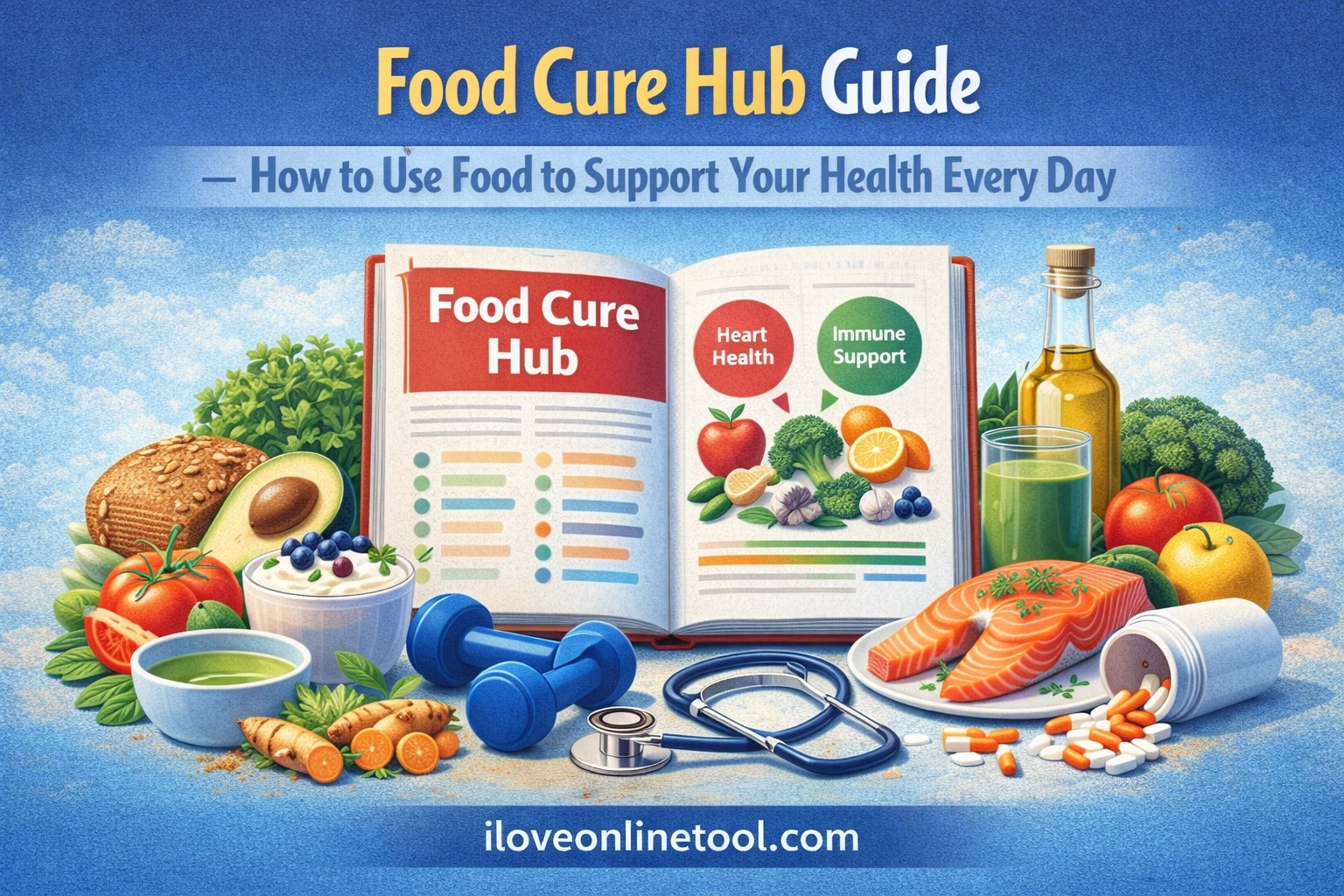
This guide explains how to use the Food Cure Hub tool effectively and how to apply food-based nutrition knowledge to your daily life in a realistic way.
What Is the Food Cure Hub?
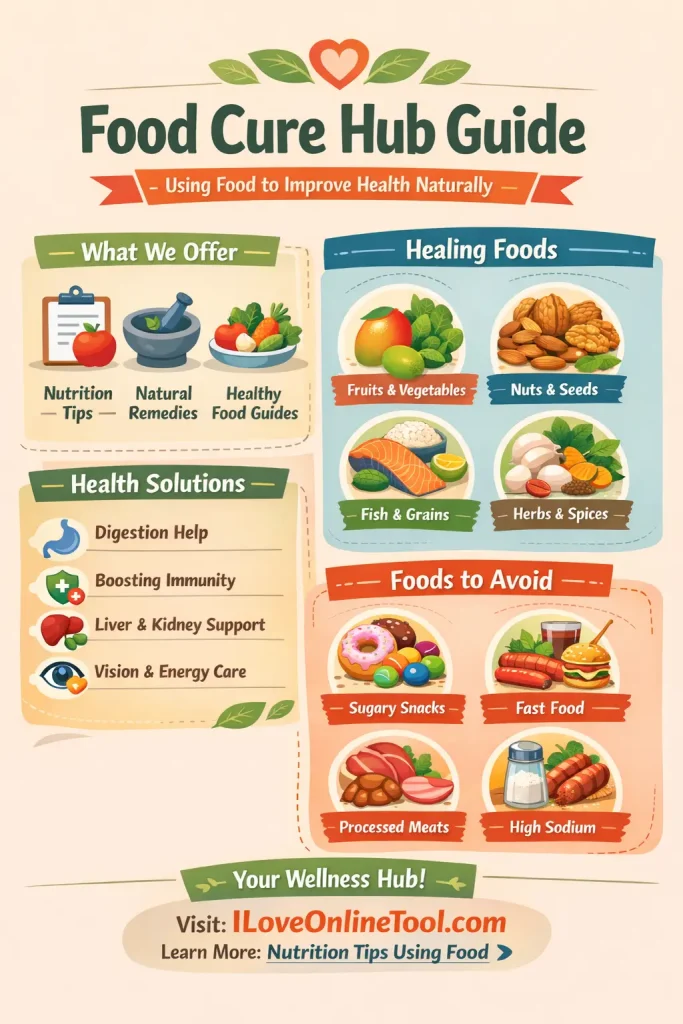
The Food Cure Hub is a free online tool on I Love Online Tool that helps you discover foods linked with common health concerns and wellness goals.
You search for a health concern — low energy, poor digestion, weak immunity, stress — and the tool shows you foods that are traditionally and nutritionally associated with supporting that concern.
It is not a diagnostic tool. It does not replace medical advice. It is an educational reference designed to help you make more informed food choices in everyday life.
How to Use the Food Cure Hub Tool — Step by Step
Using the tool is genuinely simple:
Step 1 — Go to the Food Cure Hub page
Step 2 — Type your health concern or goal into the search box. Examples: “low energy”, “digestion”, “immunity”, “skin health”
Step 3 — Read the food suggestions that appear
Step 4 — Apply them gradually to your diet over days and weeks — not all at once
That’s the entire process. No account. No fee. Your searches are not saved or tracked anywhere.
What Kind of Concerns Can You Search?
The tool covers a wide range of everyday health concerns that people genuinely look for food guidance on:
Energy and Fatigue — Foods that provide sustained energy rather than short spikes. Iron-rich foods, complex carbohydrates, and protein sources are commonly suggested here.
Digestive Health — Foods that support gut function, reduce bloating, and promote regular digestion. Fiber-rich vegetables, fermented foods, and adequate hydration are key players.
Immunity Support — Foods rich in vitamin C, zinc, and antioxidants that support your immune system’s daily function. Citrus fruits, garlic, ginger, and leafy greens appear frequently.
Skin Health — Foods containing vitamins A, C, E and healthy fats that support skin repair and hydration from the inside.
Bone and Joint Health — Calcium-rich foods, vitamin D sources, and anti-inflammatory options are commonly linked with bone and joint support.
Mental Clarity and Mood — Omega-3 rich foods, whole grains, and certain vitamins have research supporting their role in brain health and mood stability.
How to Actually Apply the Suggestions in Real Life
This is the part most people skip — and it matters most.
Getting a list of healthy foods means nothing if you don’t know how to include them in your actual daily diet. Here’s how to apply the suggestions practically:
Start with one or two foods — Don’t try to overhaul your entire diet at once. Pick one or two foods from the suggestions that you already like or have access to. Add them consistently for two to three weeks before changing anything else.
Build around your existing meals — In Pakistani cooking, many of the most nutritionally powerful foods are already common ingredients — spinach, lentils, ginger, turmeric, dates, yogurt, and garlic. Often you just need to use them more intentionally rather than adding completely new foods.
Consistency over intensity — Eating spinach once a month has almost no impact. Eating it two to three times a week over several months builds real nutritional benefit. Small, consistent habits always outperform dramatic short-term changes.
Pair foods thoughtfully — Some nutrients are absorbed better together. Vitamin C helps iron from plant foods absorb better — so squeezing lemon over lentil dal is not just traditional, it’s nutritionally smart. Turmeric absorbs better with black pepper and a small amount of fat.
Be realistic about expectations — Food works slowly. You will not feel dramatically different after one week of eating better. But after two to three months of consistent improvement, most people notice real differences in energy, digestion, and overall feeling.
What the Food Cure Hub Is NOT
Being honest about limits is just as important as explaining what the tool offers.
The Food Cure Hub is not a medical diagnostic tool. It cannot tell you what condition you have or what treatment you need.
It is not a replacement for a doctor or nutritionist. If you have a chronic health condition, diabetes, heart disease, kidney problems, or any condition requiring medication — please follow your doctor’s guidance. Food is a complement to medical care, not a substitute.
It is not a weight loss program. While eating whole, nutritious foods generally supports a healthy weight over time, this tool is not designed as a weight loss plan.
It does not account for allergies or individual sensitivities. Always check any food suggestion against your own known allergies or dietary restrictions before including it.
A Note on Using Common Sense With Food Information
Here is something I want to say directly as the person who built this tool.
The internet is full of extreme food advice. Superfoods that cure everything. Miracle diets that transform you in 30 days. Foods to avoid at all costs. Most of this is exaggerated, oversimplified, or simply wrong.
Genuine nutrition science is much less dramatic. It says: eat a variety of whole foods consistently. Avoid heavily processed foods most of the time. Stay hydrated. Don’t skip meals. Get enough protein, fiber and healthy fats.
That’s most of what the research actually supports. The Food Cure Hub is built around that honest, balanced approach — not around dramatic claims.
Related Tools on This Platform
For a complete picture of your health and wellness:
- BMI Calculator — Check your Body Mass Index based on height and weight
- Height & Weight Calculator — Find your healthy weight range
- Unit Converter — Convert between measurement units for cooking and nutrition tracking
Frequently Asked Questions
Is the Food Cure Hub tool free? Yes — completely free, no account required, no hidden features behind a paywall.
Does the tool give personalized nutrition plans? No. It provides general educational food suggestions based on health concerns. For personalized plans, consult a registered nutritionist.
Can I use it for my children? The general food information applies broadly but children have specific nutritional needs. For children’s nutrition, always consult a pediatrician or child nutritionist.
How often should I check the tool? Use it whenever you have a specific health concern or want to explore foods for a new wellness goal. There is no set frequency — treat it as a reference resource.
The food suggested isn’t available in my area — what do I do? Look for locally available foods in the same nutritional category. The tool suggests examples — the specific food matters less than the nutrient it provides. A local leafy green works just as well as a foreign one if the nutritional profile is similar.
⚠️ Health Disclaimer
All content provided through the Food Cure Hub tool and on this page is for general educational purposes only. It is not intended as medical advice, nutritional prescription, or treatment for any health condition. Individual health needs vary. Always consult a qualified doctor or registered nutritionist before making significant dietary changes, especially if you have a medical condition, are pregnant, or are taking medication.
About the Author
Written by Ahsan — Founder of I Love Online Tool, based in Lahore, Pakistan. Ahsan is a digital tools developer and educational content writer who builds free, practical online utilities for students, professionals, and everyday users. All content on this platform is written and personally reviewed by Ahsan for accuracy, responsibility, and genuine usefulness.
📧 support@iloveonlinetool.com | 🌐 iloveonlinetool.com
